Short answer: you can sell online in Uzbekistan in three ways — on a marketplace such as Uzum Market, through a shop in Telegram, or on your own website. A marketplace brings the first orders fastest, but it takes a commission on every sale that depends on the product category. Telegram costs almost nothing to start if customers already know you. Your own website costs more upfront, but on each sale you only pay the payment provider about 2%, and the customers and prices stay yours. Whichever you choose, you will need a registered business (sole proprietor, self-employed or company), a way to take payments and delivery. Below we compare the three options and go through paperwork, payments, receipts, delivery, the legal pages a store needs and what an online store costs in Tashkent. All figures were checked on 8 November 2026; sources are linked in the text.
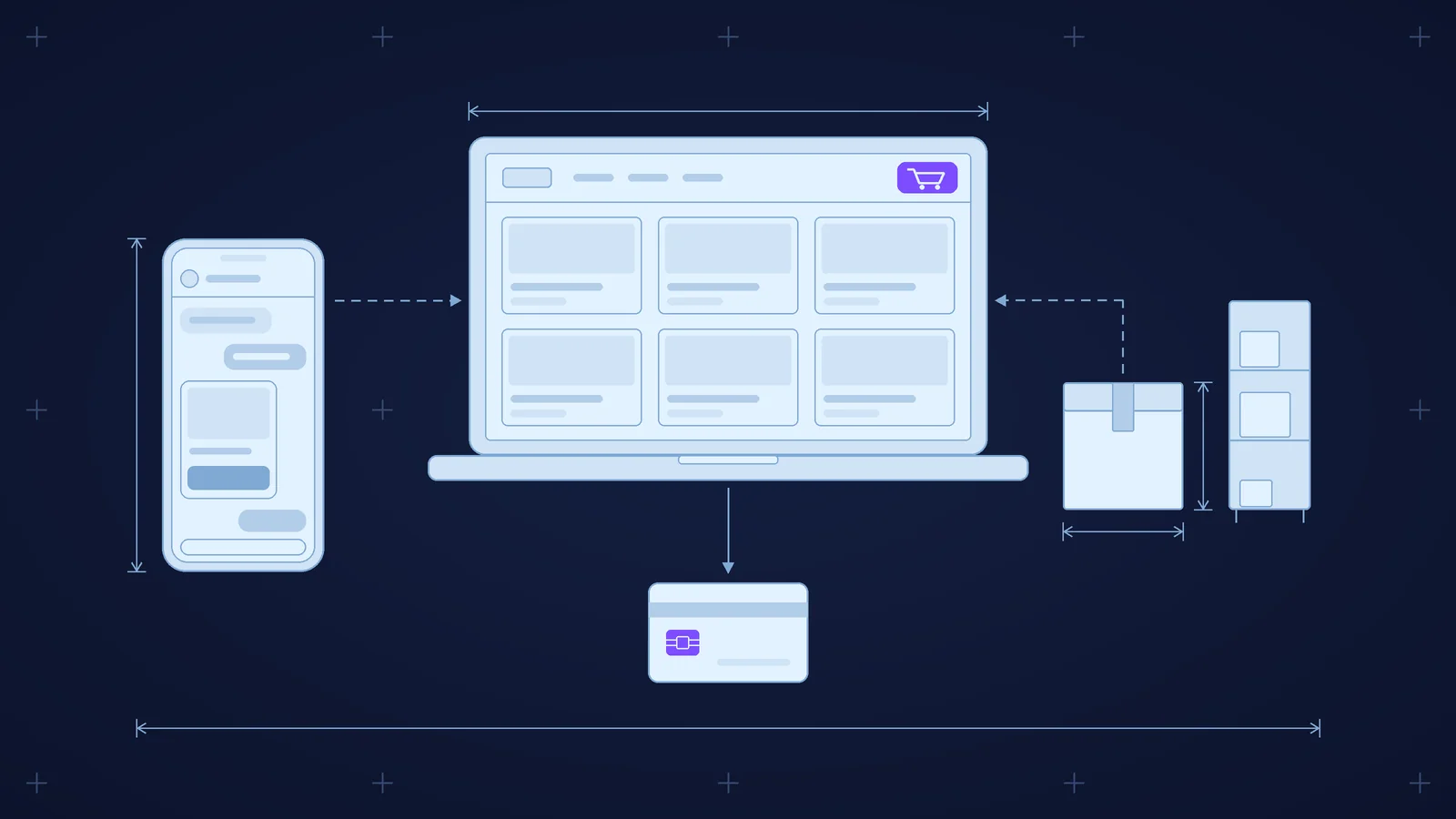
Own website, marketplace or Telegram: comparison
| Own website | Marketplace (Uzum Market) | Telegram | |
|---|---|---|---|
| Launch | A catalogue with request forms takes 2–3 weeks, with a cart and payment from 4 weeks. Plus a contract with a payment provider. | Sign up in the seller account and create product cards. No development needed. | A channel takes a day. A shop bot on a builder takes a few days, a custom bot up to a couple of weeks. |
| Costs and fees | Development, hosting, domain. Per sale, the payment provider's fee of about 2%. Advertising is on you. | A commission on every sale by category, a logistics fee per unit, a fee for frequent payouts. | A channel is free. A bot means a builder subscription or development. Per sale, about 2% to the payment provider. |
| Customers and prices | Customers, their contacts and order history are yours. You set prices, discounts and design. | You set the price, but buyers come to the platform, with competitors next to you in the results. Returns and payouts follow the platform's rules. | Subscribers are yours, but almost nobody finds a bot through Google: you bring buyers in yourself. |
| Best for | Stores with their own brand and a wide range, those who invest in ads and want sales from search. | Testing demand without paying for development, and mass-market goods. | Sellers who already have an audience on Instagram or Telegram and a small range. |
These options can be combined. Many sellers start on a marketplace or in Telegram and launch a website once they know which products sell and how much they can spend on ads.
Marketplace: how selling on Uzum Market works
Uzum Market has more than 18,500 sellers (Kursiv). It accepts companies, sole proprietors and self-employed individuals registered in Uzbekistan (seller requirements), so a foreign business needs a local entity first. There are four fulfilment models:
- FBO: goods are stored in an Uzum warehouse and Uzum delivers them. If an item is sold under several models, the storefront shows the FBO stock first (Uzum help).
- FBS: goods stay in your warehouse, Uzum delivers.
- DBS: you store and deliver yourself. There is no logistics fee, only the commission (Uzum, May 2025). You build delivery into the price and cannot charge the buyer for it separately.
- EDBS: the sale is made directly between you and the buyer, Uzum acts as a storefront. Only some categories qualify: electronics, home appliances, cars, sports and leisure, children's furniture and a few others. Instead of a commission Uzum charges a fee for information and advertising services as a percentage of revenue, and EDBS requires a separate legal entity and seller account (Uzum help).
Fees are listed on the tariffs page. The commission depends on the category and is calculated automatically. In the official calculator, for example, on FBO refrigerators pay 10%, boys' rubber sandals 20.5%, women's sports socks 25%. According to Kursiv, rates across all categories range from 3% to 35%. Since 1 June 2026 there is also a logistics fee for every unit sold: 5,250 soums for an item up to one litre in volume plus 250 soums for each extra litre, capped at 50,000 soums. Payouts every two weeks or once a month are free, weekly payouts cost 1% and daily payouts 1.5%. A seller is paid for an order after the 10 days the buyer has to return it.
An example: an item priced at 300,000 soums in a category with a 20% commission, up to one litre in volume. The platform keeps 60,000 soums of commission and 5,250 soums of logistics, 65,250 soums in total, or almost 22% of the price. On your own website the payment provider would take about 6,000 soums from the same sale, but you have to bring the buyer to the site yourself, and ads cost money too.
At scale the gap grows. 100 sales of that item a month mean 30 million soums in revenue: the marketplace keeps about 6.5 million soums in commission and logistics, a payment provider on your own site about 600,000. The difference, almost 5.9 million soums a month, is what pays for advertising the site and pays back the development.
What to check before you sign up. Some categories need certificates of conformity or sanitary approvals, which are reviewed within three working days. Alcohol, tobacco, vapes and e-cigarettes are banned. Medicines and medical goods are on the same banned list, but with a caveat: to list some of them, the platform requires a sanitary (SES) certificate and a certificate of conformity, so check your category in the requirements. Goods must be worth at least 5 million soums at retail per cubic metre, except large appliances. Besides Uzum, the country has Market Yandex Go (since April 2025) and Wildberries, which accepts sellers from Uzbekistan only as sole proprietors or companies (MoySklad).
Telegram: a channel, a bot or a shop builder
The cheapest start is a channel with photos and prices, with orders taken in private messages. It works while orders are few: a manager handles each one by hand and keeps stock and payments in a spreadsheet.
The next step is a bot with a catalogue and a cart. Telegram lets bots accept payment for physical goods through payment providers, and the Uzbek soum is on the list of supported currencies (Telegram documentation). A bot can be assembled on a builder: TGShop, for example, connects Click, Payme, Uzum Nasiya instalments and cash. To accept Payme in such a bot, you need your own contract with Payme. You can also order a custom bot: according to the gptbot.uz price list, it costs from 990,000 soums for a basic bot with buttons and request forms and no payments, and from 4.9 million soums for a bot with Payme and Click payments and a storefront or mini app, built in 3 to 14 days once materials are provided. Payme charges 2.0% for payments in a Telegram bot, the same as for an online store (business.payme.uz).
Telegram's main limitation: buyers do not find a bot through Google. If you have no social media audience, you will be paying for every order with ads from day one.
Your own website: when it makes sense
A website is worth building when:
- you have many products and buyers choose by specifications such as power, size or material;
- you invest in ads and want buyers to come back to you, not to a platform;
- people search Google for your products by model or category name;
- you are a dealer or sell to companies that need an invoice rather than a cart.
You do not need a cart on day one. You can start with a catalogue website: categories, product cards with specifications and a request form or call button on every page. Two of our projects work this way: the TCL air conditioner catalogue has five equipment categories with specifications in Russian and Uzbek, and the one-page Midea Home showcase offers air conditioner selection by room size and models with prices in soums. Neither has a cart: buyers leave a request or call. A cart and online payment are added once there are more orders than a manager can handle.
It is too early for a website if you are testing demand for a couple of products or have no ad budget: a site without visitors brings no orders. In that case, start on a marketplace or in Telegram.
Registration, taxes and product marking
- Documents for a marketplace. Uzum accepts companies, sole proprietors and self-employed sellers. A sole proprietor provides the registration certificate and a passport; an LLC, its registration certificate, the order appointing the director and a passport; a self-employed seller, the registration certificate and a passport. Uzum recommends the activity code (OKED) for retail trade in food and non-food goods.
- Self-employed. Since 2026, general retail trade has been removed from the list of activities allowed for the self-employed, but "retail sale of goods on electronic trading platforms" has been added (Spot). The e-commerce law defines a platform broadly, as an information system for buying and selling remotely, and lets a seller run its own (Arts. 3 and 9 of ZRU-792). But we have not found a tax authority clarification for the self-employed with their own website, and the definition changes on 12 December 2026. If you plan to sell through your own site as self-employed, check with the Tax Committee hotline, 1198.
- Tax. Since 1 January 2026, sole proprietors and self-employed individuals with a turnover of up to 1 billion soums pay 1% of turnover (Gazeta.uz).
- Payment QR code. From the same date, sole proprietors and the self-employed in retail must accept electronic payments through a special QR code (Spot). Marketplace sellers whose platform reports to the tax authority directly, such as Uzum and Yandex, do not need it. How this rule applies to payments on your own website through Payme or Click is another question for the tax office.
- Product marking. Mandatory digital marking under the Asl belgisi system applies to tobacco, alcohol, beer, home appliances, medicines and medical devices, water and soft drinks, among others (Tax Committee). Clothing, footwear and cosmetics are not on the mandatory list on the tax authority's page.
Accepting payment on a website: Payme and Click
| Payme Business | Click | |
|---|---|---|
| Online store fee | 2.0% | 2% for goods and 2.5% for services on Uzcard and Humo cards; domestic Visa cards 2.5% |
| Who can connect | Organisations with a business bank account; the page says nothing about the self-employed | Self-employed, sole proprietors and companies. The self-employed sign up in the Click SuperApp without a contract and accept payment by QR code or a payment link; the page says nothing about website payments for them |
| Documents | Director's passport, registration certificate (guvohnoma), VAT certificate if you have one; each cash desk needs an ePOS terminal from your bank | Director's passport, registration certificate, a business bank account in an Uzbek bank and its MFO (bank) code |
| Contract | Online via Didox with a digital signature, or on paper | Via Didox with a digital signature, or on paper through a manager |
Sources: business.payme.uz, business.click.uz and Click for the self-employed. Connecting Payme is free, and money reaches the business bank account within one banking day. Cash on delivery is handled by courier services, covered below.
Banks also check the website itself. Octobank, for example, in its requirements for online acquiring lists HTTPS, a .uz domain, payment system logos, a public offer describing ordering, payment, returns and delivery, a privacy policy and acceptance of the offer before the "Pay" button. These are one bank's requirements, and Payme and Click do not list them on their sites. But the offer is required by law (Art. 16 of ZRU-792), and from 12 December 2026 it must include return terms. Prepare the offer with return terms before you apply.
Receipts and IKPU codes
Under the e-commerce law (Art. 23 of ZRU-792), a buyer who pays by card or through a payment app must be sent an electronic receipt from a virtual cash register by text message, email or to their personal account. There are two ways to issue it (Buxgalter.uz, 2023):
- The payment app issues the receipt. The seller adds the payment company as a commission agent on my.soliq.uz, and the receipt shows the seller's tax ID. Click can work this way: to set up fiscalisation through Click, its manager asks for each product's IKPU code (the tax product classifier code), VAT status, receipt type and unit of measure.
- The seller issues the receipt. The app only takes the payment, and the seller's online or virtual cash register issues the receipt.
According to the Buxgalter.uz expert, the first setup suits a business with one product or all products under one IKPU code, and the second suits stores with a wide range. Agree on the setup with your accountant before connecting payments, and add IKPU codes as a column in your product spreadsheet from the start.
What a store website must have by law
The main document is the Law on Electronic Commerce (ZRU-792). Together with the consumer protection law, it sets out a minimum set of pages and rules:
- Public offer. The seller's name (full name for the self-employed), postal and email address, phone number, licences where required, how an order is placed and withdrawn, payment and delivery terms, prices (Art. 16).
- Product information. Full details about the product, the manufacturer and the terms of purchase (Art. 9).
- Exchanges and returns. A buyer can exchange non-food goods of proper quality within 10 days and, if there is no replacement, get the money back. The item must be unused and the buyer needs the receipt; exceptions are listed in Cabinet of Ministers Resolution No. 75 (Competition Committee guidance). Money is refunded the same way it was paid unless agreed otherwise, at the seller's expense. Late refunds carry a penalty of 1% a day, capped at the refund amount (Art. 27). Defective goods are replaced within 7 days, or 20 days if a quality check is needed (Art. 26).
- Delivery times. If the contract does not state a delivery time and it cannot be determined, the law sets it at 30 days. Put your real delivery times in the offer.
- Personal data. A store keeps buyers' names, phone numbers and addresses. Since 27 March 2026, only biometric and genetic data and data on telecom subscribers must be stored in Uzbekistan. Other data may be stored abroad under the conditions set by law, for example in countries on the approved list (Kun.uz). Publish a personal data policy on the site.
- Amendments from 12 December 2026. Under Law ZRU-1173 the public offer must also state how goods and money are returned, and sellers, including sole proprietors and the self-employed, may settle e-commerce payments only through a separate bank account (sole proprietors and the self-employed also through an e-wallet) (ZRU-792 on lex.uz).
Delivery in Tashkent and the regions
The delivery market is growing: in January–June 2026, postal and courier services in Uzbekistan reached 4.2 trillion soums, 18.2% more than a year earlier (National Statistics Committee). A store has three options: its own courier, a delivery service or pickup. Services that work with online stores:
- Fargo. According to the company, express delivery in Tashkent within 4 hours, 98% of parcels across the country delivered the next day, 120 cities, cash on delivery, returns, sync with Uzum orders.
- BTS Express. Within 24 hours across Uzbekistan, express delivery within one day in Tashkent, a dedicated service for online stores with delivery, returns and payment on receipt.
- EMU. More than 220 branches and fulfilment: storage, picking, packing, delivery and returns, plus an API for online stores.
- Yandex Go "Across Uzbekistan". Parcels up to 12 kg between cities through pickup points for a flat 9,500 soums regardless of distance (sponsored Spot article, December 2025).
Courier services rarely publish business rates: you get a price from a calculator on their site or from a manager under contract. Ask two or three services for rates before launch, and show buyers the delivery cost before checkout, not after.
Online store launch checklist
- Choose an option from the table at the top and work out what is left from each sale after fees and delivery.
- Register as a sole proprietor, self-employed or an LLC on my.gov.uz. If you want to sell through your own site as self-employed, check with the tax office first.
- Check your products: are they banned, do they need certificates or Asl belgisi marking.
- Build a product spreadsheet: name in Russian and Uzbek, price in soums, specifications for filters, photos, stock, IKPU code.
- Open a business bank account and connect payments: Payme Business, Click or both. Agree with your accountant who issues the receipt.
- Sign a contract with a delivery service: zones, times, prices, cash on delivery.
- Prepare the public offer, payment, delivery and return terms, and a personal data policy.
- Register a domain: a .uz domain costs about 35,000 soums a year (example price list).
- Place a test order: pay, get the receipt, refund it. Check that the order reached the manager.
- Set up analytics and goals so you can see where orders come from, and only then start ads.
What a store website costs: Tashkent studio prices
Published prices of Tashkent studios for an online store as of 8 November 2026:
| Studio | Price | What the price list says |
|---|---|---|
| Megagroup | from 6 million soums | Ready-made template and content upload, 7 days; renewal from 1.65 million soums a year |
| Oqila | from 14,469,000 (currency not stated) | "Internet do'kon ochish" (online store) package |
| Saytyaratish | from 15 million soums | 20 days, customer accounts, Click and Payme |
| Webnow | from 22.5 million soums | Hosting, domain and SSL free for the first year (promotion) |
The almost fourfold gap comes down to what is included: a ready-made template or a custom design, how many pages and products are loaded, whether payments are connected. Megagroup is the cheapest because it is a ready-made template with a yearly renewal fee. The other studios in the table start at 14.5 million. How to compare estimates and check a studio before paying is covered in our article "How much does a website cost in Tashkent in 2026".
Our prices: online store development starts with a catalogue, from 8 million soums in 2–3 weeks. This includes categories and filters by specifications, product cards with photos, a request form and call button on every page, Russian and Uzbek versions and a mobile version. A store with a cart and online payment via Payme, Click and Uzum starts from 10 million soums and takes from 4 weeks; stock import from 1C is priced after a short brief. Hosting and support cost from 65,000 soums a month, with the first two months free. Errors found in the first 30 days after launch are fixed for free.
Budget for the first year beyond development: domain, hosting, about 2% of turnover in payment fees, delivery, product photos and advertising. If you are counting on sales from search, add SEO: we looked at what it costs in Tashkent in a separate article.
If you already have a website and want to add a store to it, check it first with our express audit: in a minute it runs 35 checks, from mobile speed to indexing. For an exact estimate, send us your product list and two or three stores you like: leave a request and we will price it for free.
FAQ
Can I open an online store without registering as a sole proprietor?
You can sell on Uzum Market as a self-employed individual. Click connects the self-employed without a contract, but describes QR-code and payment-link payments for them, not a website checkout. For your own website it is less clear: the self-employed may sell at retail on electronic trading platforms, and under the e-commerce law your own site can count as one, but we have not found a tax authority clarification for the self-employed. Check with the tax hotline, 1198.
How much does it cost to open an online store in Uzbekistan?
A marketplace needs no development, but every sale carries a category commission and a logistics fee. A Telegram channel is free, a custom bot with request forms starts at 990,000 soums, and one with payments and a storefront at 4.9 million soums. A store website from a Tashkent studio costs from 6 million soums on a template to 22.5 million and more. Our catalogue starts at 8 million soums, a store with a cart and payments at 10 million soums.
Which pays off better: Uzum Market or your own website?
Per sale, your own website wins: about 2% to the payment provider versus a category commission plus logistics on the marketplace. But buyers come to a marketplace on their own, while a website needs ads and search to bring them. That is why many sellers start on a marketplace and launch a website once they know their best-selling products.
Does a store website need a .uz domain?
Payme and Click do not require one on their pages, while Octobank does for online acquiring. A .uz domain costs about 35,000 soums a year, so it is simpler to register one from the start.
Can customer data be stored on a server abroad?
Yes. Since 27 March 2026 this is allowed under the conditions of the personal data law. Only biometric and genetic data and data on telecom subscribers must be stored in Uzbekistan.
How long does it take to launch your own website?
A catalogue with request forms takes 2–3 weeks, a store with a cart and payments from 4 weeks. Connect payments in parallel: the timing depends on the provider's review of your application and on the site being ready, so prepare the offer and return terms in advance.